Почему лазерная очистка – это недостаточно освоенный рынок?
Традиционные методы очистки поверхностей, такие как пескоструйная обработка, химическая очистка и очистка сухим льдом, десятилетиями доминировали в промышленном обслуживании. Они эффективны, но имеют серьезные недостатки: опасные отходы, экологические разрешения, стоимость абразивных материалов, время очистки и повреждение материалов основания.
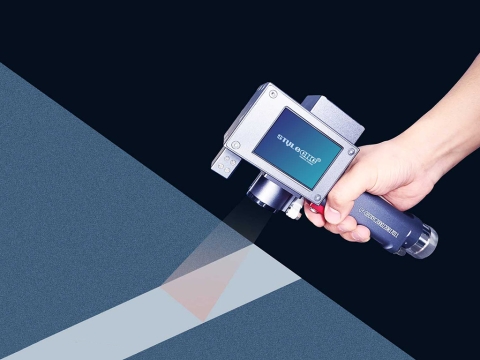
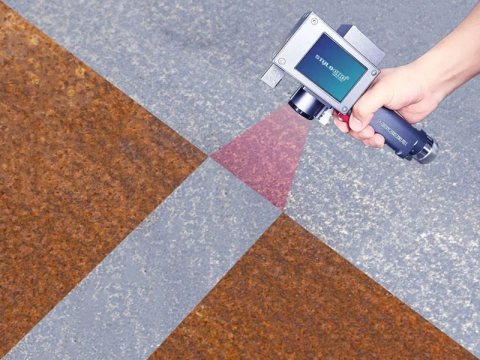
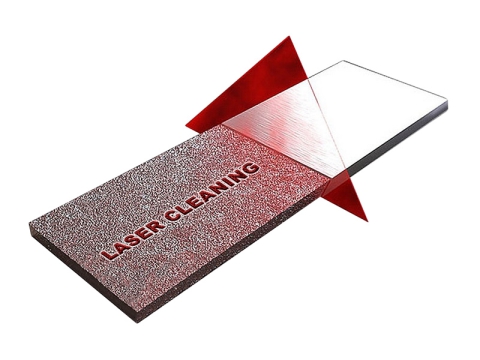
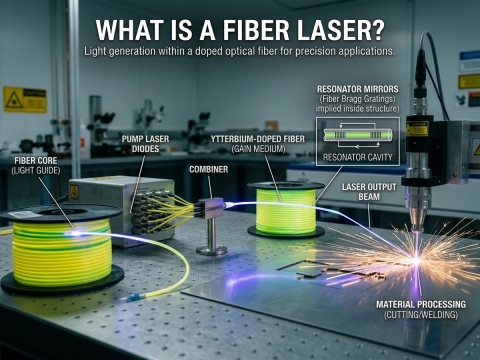
Лазерная очистка устраняет все эти проблемы. Сфокусированный луч волоконного лазера испаряет ржавчину, краску, оксидные слои и загрязнения, не затрагивая основной металл. Никаких абразивных материалов. Никаких химикатов. Никаких вторичных отходов. Поверхность остается неповрежденной и готовой к нанесению покрытия или сварке.
Несмотря на эти преимущества, на большинстве местных рынков нет ни одного поставщика услуг мобильной лазерной очистки. Технология уже много лет используется в промышленности, но снижение цен на оборудование до диапазона от 8,000 до 30,000 долларов США сделало ее доступной для независимых сервисных компаний. Этот разрыв между растущим спросом и низкой конкуренцией — это и есть возможность.
Для сравнения лазерной очистки с традиционными методами по стоимости, скорости и воздействию на окружающую среду, ознакомьтесь с подробным сравнительным анализом. Лазерная очистка против пескоструйной обработки против очистки сухим льдом.
Как работает модель мобильных услуг
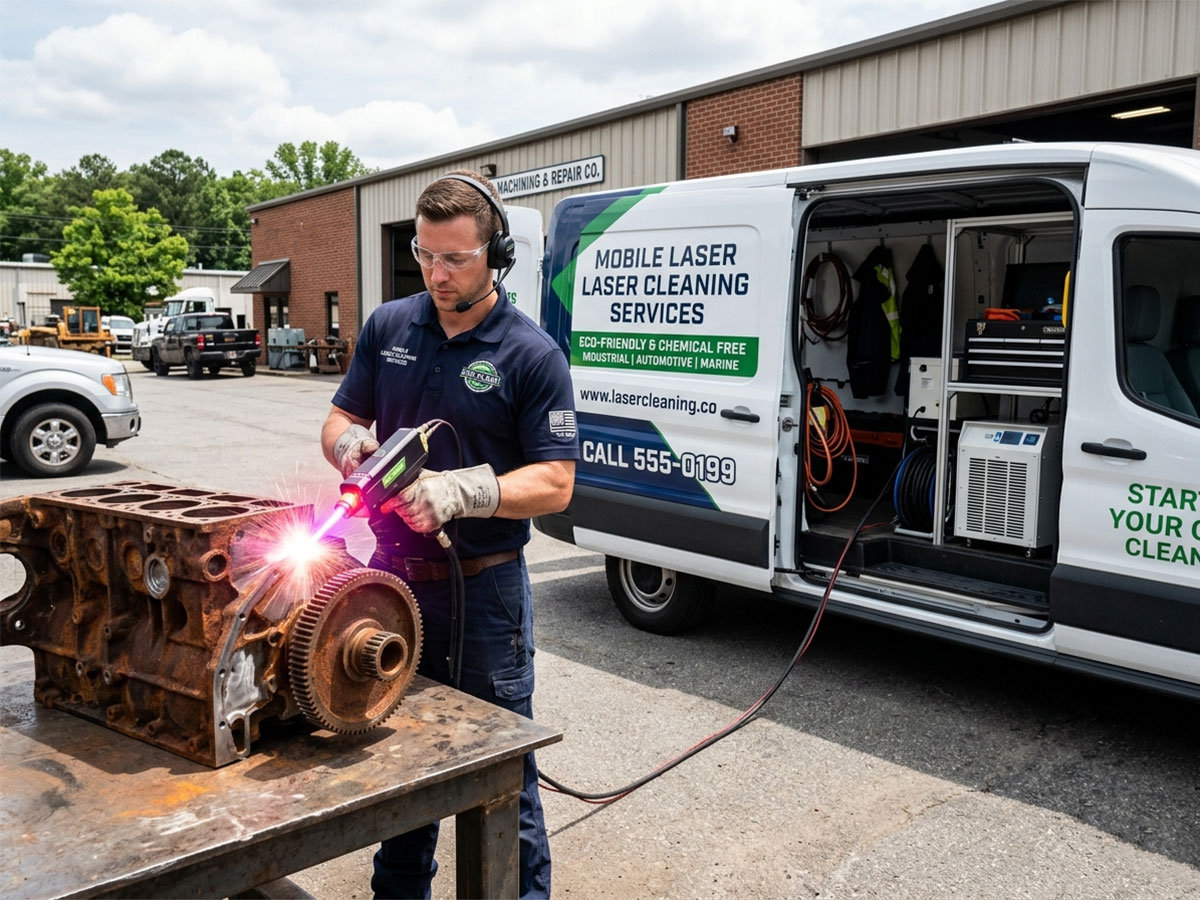
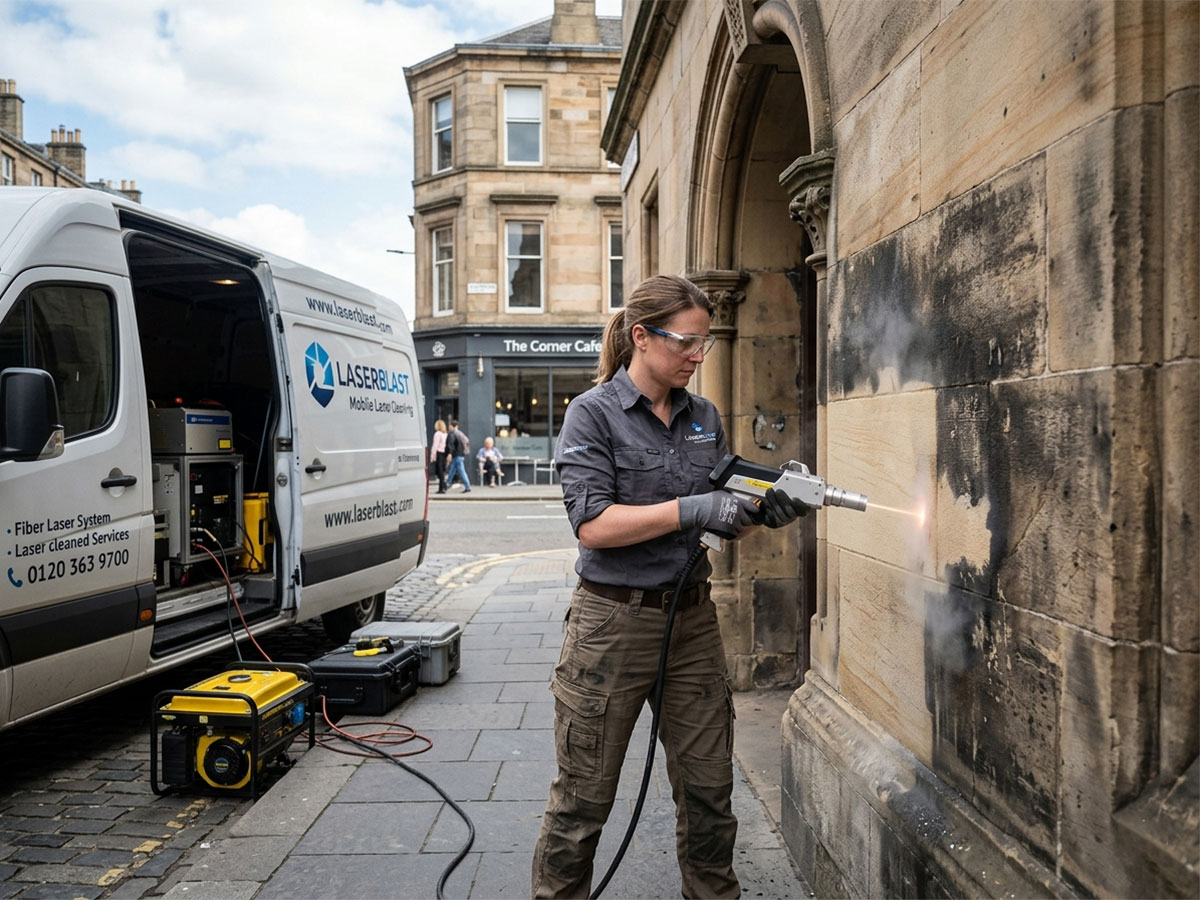
Бизнес-модель проста: вы привозите портативную лазерную систему очистки на объект клиента, очищаете поверхность в соответствии с требованиями и выставляете счет почасово или за проект. Никаких накладных расходов цеха. Никаких затрат на транспортировку материалов. Никаких разрешений на утилизацию отходов.
Что вы можете привнести на рабочее место
• Портативный волоконно-лазерный очистительный блок (от 15 до 50 кг в зависимости от мощности).
• Ручная чистящая головка с регулируемой шириной луча.
• Защитные очки для работы с лазером (OD5+ при 1,064 нм) для оператора и находящихся рядом работников.
• Небольшой генератор или доступ к клиенту. 220V источник питания.
• Служебный автомобиль: фургон, внедорожник с грузовым отсеком или автомобиль на прицепе.
То, что ты оставляешь после себя
Ничего. В этом и заключается весь главный аргумент в пользу покупки. Никаких частиц абразивного материала, разбросанных по полу. Никаких химических остатков. Никаких загрязненных отходов, требующих специальной утилизации. Удаленный материал испаряется, превращаясь в микрочастицы, улавливаемые встроенной системой вытяжки машины или портативным вытяжным устройством. Клиенты платят больше именно потому, что лазерная очистка делает их помещение чище, чем оно было до начала работ.
Варианты оборудования: ручное, рюкзаковое, стационарное.
Выбор подходящего оборудования зависит от ваших целевых клиентов и типов работ, которые вы планируете выполнять. Понимание различий между импульсный и непрерывный лазер Выбор технологии является первостепенным, поскольку он определяет точность, скорость и безопасность используемых материалов при очистке.
| Измерения | Ручной импульсный | Рюкзак Пульсированный | Ручной CW | Стационарная система |
|---|---|---|---|---|
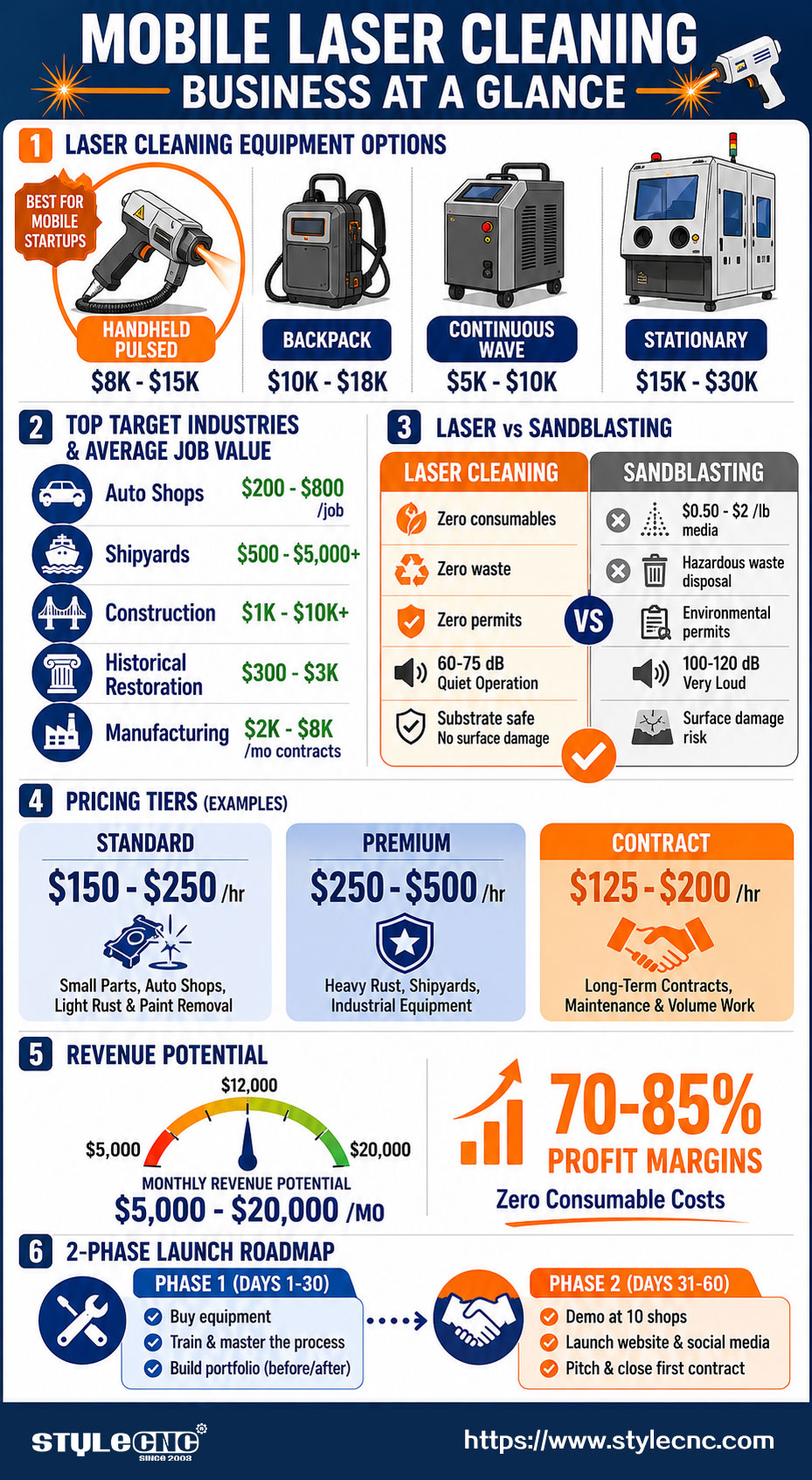
| Ценовой диапазон | $ $ 8,000 15,000- | $ $ 10,000 18,000- | $ $ 5,000 10,000- | $ 15,000- $ 30,000 + |
| Мощность | 100-300W | 100-200W | 1,000-2,000W | 200-1,000W |
| Вес | 15-30 кг | 10-18 кг | 30-50 кг | 50-200 кг |
| Мобильность | Высокий (фургон/внедорожник) | Очень высокая высота (переноска одним человеком) | Умеренный уровень (тележка/фургон) | Низкий (фиксированное местоположение) |
| Лучшие приложения | Ржавчина, краска, оксиды на плоских/изогнутых поверхностях | Ограниченные возможности доступа, полевые работы, удаленные участки. | Сильная ржавчина, толстые слои покрытия, быстрое удаление ржавчины. | Очистка производственных помещений, очистка от плесени. |
| Безопасность субстрата | Отличное состояние (без повреждений от перегрева) | Прекрасно | Умеренный (тепловой удар по тонким металлам) | Прекрасно |
| Расходные материалы | 0 | 0 | 0 | 0 |
| Лучшее для мобильных устройств | Основная рабочая лошадка | Удалённая/ограниченная работа | Крупные промышленные контракты | Дополнительная услуга на основе магазина |
Для большинства начинающих мобильных операторов это импульсная лазерная чистящая машина с 100 по 300W Данная линейка предлагает оптимальное сочетание портативности, безопасности обрабатываемых материалов и точности очистки. Импульсные системы предотвращают накопление тепла, которое может деформировать тонкие металлы, что делает их безопасными для автомобильных панелей, прецизионных деталей и исторических артефактов.
Операторам, которым необходима максимальная мобильность для работы на удаленных строительных площадках, на строительных лесах или в ограниченных пространствах, следует рассмотреть возможность приобретения оборудования. лазерный очиститель рюкзака Это освобождает обе руки и устраняет необходимость размещать тележку или станок рядом с рабочей поверхностью.
Целевые отрасли и типы клиентов
Автомастерские и реставрационные мастерские
Для реставрации классических автомобилей требуется точное удаление ржавчины без повреждения оригинального листового металла. Автомастерским необходимы чистые, незащищенные металлические поверхности перед нанесением грунтовки. Лазерная очистка обеспечивает и то, и другое, не деформируя панели и не удаляя качественный металл.
• Средняя стоимость работы: 200–800 долларов США за автомобиль (частичная или полная чистка рамы).
• Потенциал повторных обращений: ремонтные мастерские отправляют от 2 до 5 автомобилей в месяц.
Судостроительные верфи и судотехническое обслуживание
Очистка корпуса, восстановление палубного оборудования и подготовка сварных швов на судах требуют обработки поверхности без попадания абразивного материала в водные пути. Экологические нормы все чаще ограничивают пескоструйную обработку вблизи воды, что создает обусловленный нормативными требованиями спрос на лазерную очистку.
• Средняя стоимость работ: от 500 до 5,000 долларов США и более за судно в зависимости от масштаба проекта.
• Конкурентное преимущество: для лазерной очистки не требуется никаких экологических разрешений, в отличие от обширной системы разрешений для пескоструйной обработки вблизи воды.
Подрядчики по строительству и инфраструктуре
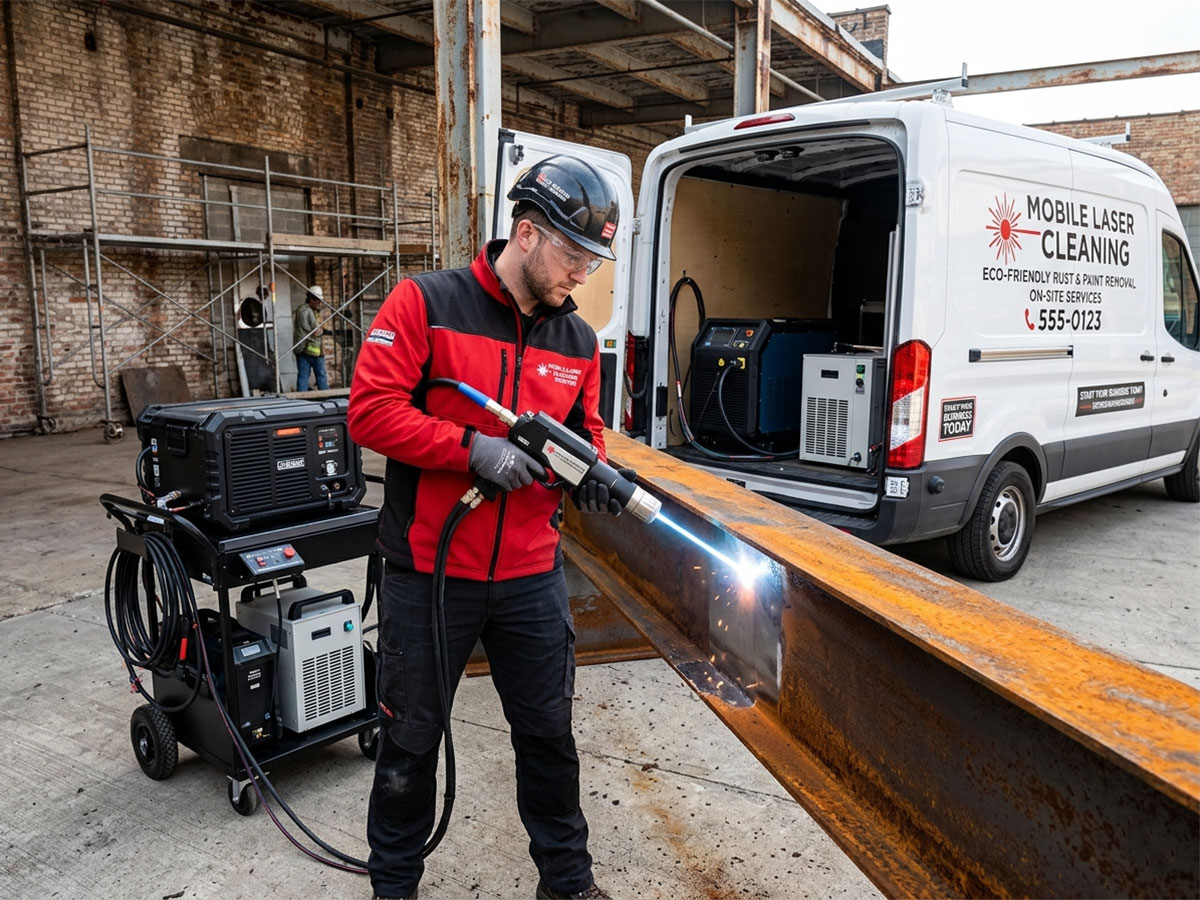
Бригадам по обслуживанию мостов, подрядчикам по монтажу металлоконструкций и компаниям, занимающимся реконструкцией зданий, необходимо удаление ржавчины и подготовка поверхности перед нанесением защитных покрытий. Лазерная очистка позволяет работать на высоте, в замкнутых пространствах и на сложных геометрических формах без необходимости уборки после снятия строительных лесов.
• Средняя стоимость работ: от 1,000 до 10 000 долларов США и более за проекты по строительству мостов и несущих конструкций.
• В государственных и муниципальных контрактах часто указываются неабразивные методы очистки, что делает лазерную очистку наиболее подходящим вариантом.
Реставрация и консервация исторических памятников
Музеям, историческим обществам и подрядчикам по реставрации необходима бережная очистка каменных, металлических и деревянных артефактов без потери материала. Параметры лазерной очистки можно настроить для удаления поверхностных загрязнений, сохраняя при этом патину и оригинальную отделку.
• Средняя стоимость работы: от 300 до 3,000 долларов США в зависимости от размера и чувствительности артефакта.
• Премиум-цена: клиенты, ранее пользовавшиеся услугами компании, платят от 30 до 50% Больше, чем промышленных клиентов, благодаря гарантии точности и неразрушающего контроля.
Производство и очистка от плесени
Очистка пресс-форм для литья под давлением, подготовка сварных швов на производственных линиях и предварительная подготовка поверхности перед нанесением покрытия — это высокоэффективные услуги, предоставляемые регулярно. лазерная машина для снятия краски Подходит для удаления покрытий в тех случаях, когда использование химических средств для удаления покрытий ограничено или когда крайне важна сохранность подложки.
• Средняя стоимость контракта: от 2,000 до 8,000 долларов США в месяц за регулярное техническое обслуживание.
Цены на услуги мобильной лазерной очистки
| Измерения | Стандартная ставка | Премиум тариф | Контрактная ставка |
|---|---|---|---|
| Почасовая ставка | 150–250 долл. США/час | 250–500 долл. США/час | 125–200 долл. США/час |
| Тип работы | Полное удаление ржавчины, подготовка поверхности. | Высокоточная реставрация, морская, историческая | Регулярное ежемесячное техническое обслуживание |
| Минимальная плата | $ 200 за посещение | $ 300 за посещение | Отказано при заключении контракта |
| Плата за поездку | 50–100 долларов в радиусе 50 миль | 100–200 долларов за пределами 50 миль | Включено в контракт |
| Маржа | на 70–80% | на 80–85% | на 65–75% |
| Лучший клиент | Автомастерские, небольшие цеха по изготовлению металлоконструкций | Судостроительные верфи, музеи, правительство | Производители, операторы автопарков |
Всегда устанавливайте минимальную плату за визит, чтобы покрыть расходы на проезд и подготовку. Минимальная сумма в 200 долларов США гарантирует, что вы не будете терять деньги на небольших заказах. Для более крупных проектов переходите на оплату за квадратный фут (от 2 до 8 долларов США за квадратный фут в зависимости от уровня загрязнения), когда это позволит получить более высокую общую сумму, чем почасовая оплата.
Договоры на техническое обслуживание — наиболее выгодная модель ценообразования. Предлагайте ежемесячную или ежеквартальную уборку по цене от 15 до 100 долларов. 20% Скидка по сравнению с разовыми тарифами в обмен на обязательство на 6-12 месяцев. Контракты стабилизируют денежный поток и снижают затраты на привлечение клиентов.
Разбивка стартовых затрат
| Категория расходов | Начальный бюджет (от 8 000 до 15 000 долларов) | Профессиональный уровень (15–30 тыс. долларов) |
|---|---|---|
| Лазерная чистка | $ $ 5,000 10,000- | $ $ 10,000 22,000- |
| Средства защиты (очки, знаки, ограждения) | $ $ 200 500- | $ $ 500 1,000- |
| Портативный экстрактор перегара | $ $ 300 800- | $ $ 800 2,000- |
| Оборудование для транспортного средства (полки, инвертор питания) | $ $ 500 1,500- | $ $ 1,500 3,000- |
| Генератор (при необходимости) | $ $ 500 1,500- | $ $ 1,000 2,500- |
| Страхование (общее страхование + профессиональные услуги) | 500–1,000 долларов в год | 1,000–2,000 долларов в год |
| Маркетинг и веб-сайт | $ $ 200 500- | $ $ 500 1,500- |
| Регистрация бизнеса | $ $ 50 200- | $ $ 100 300- |
| Измерения | ||
| Всего | $ $ 7,250 16,000- | $ $ 15,400 34,300- |
Просмотрите полный ассортимент машины для очистки волоконным лазером Перед выбором оборудования сравните уровни мощности, портативность и цены всех моделей.
Преимущества перед традиционными методами очистки
• Отсутствие расходных материалов: не нужно покупать, транспортировать или утилизировать песок, химикаты, сухой лед или абразивные материалы.
• Разрешения на безотходное производство: пескоструйная обработка вблизи водоемов или в городских районах требует экологических разрешений, в отличие от лазерной очистки.
• Сохранение подложки: лазерная очистка удаляет загрязнения, не повреждая основной материал, что крайне важно для тонких панелей и исторических артефактов.
• Скорость: лазерная очистка обрабатывает от 1 до 15 квадратных футов в час в зависимости от степени загрязнения и уровня мощности, что сопоставимо с пескоструйной обработкой легкой ржавчины и быстрее при выполнении высокоточных работ.
• Мобильность: портативное устройство весом 15 кг можно использовать где угодно, включая замкнутые пространства, возвышенные платформы и резервуары.
• Безопасность: отсутствие воздействия пыли диоксида кремния (одной из основных причин профессиональных заболеваний легких при пескоструйной обработке), отсутствие риска разбрызгивания химических веществ, отсутствие летящих частиц.
• Уровень шума: лазерная очистка работает при уровне шума от 60 до 75 дБ по сравнению со 100-120 дБ при пескоструйной обработке, что позволяет работать в условиях, чувствительных к шуму.
Распространенные ошибки, из-за которых новые операторы теряют деньги
• Приобретение лазера непрерывного излучения (CW) для точных работ, где требуется импульсный лазер, приводит к повреждению тонких металлов от перегрева и потере доверия клиентов.
• Занижение цен на услуги до уровня пескоструйной обработки вместо того, чтобы брать плату за преимущества лазерной очистки (отсутствие отходов, повреждений и разрешений).
• Отсутствие инструктажа по технике безопасности при работе с лазерами и надлежащей разметки, что создает потенциальную юридическую ответственность и нарушает стандарты ANSI Z136.
• Ориентация только на одну отрасль вместо диверсификации по 3-4 типам клиентов для стабилизации доходов в течение сезонных циклов.
• Отсутствие договоров на техническое обслуживание означает, что каждый месяц приходится начинать с нуля, вместо того чтобы формировать постоянный доход.
• Пренебрежение присутствием в интернете: большинство клиентов ищут в интернете «удаление ржавчины лазером рядом со мной», прежде чем позвонить, поэтому наличие простого веб-сайта с фотографиями «до» и «после» крайне важно.
• Отсутствие надлежащего страхования, особенно при работе с транспортными средствами, судами или историческими артефактами, принадлежащими клиенту.
Начало работы: Ваш первый 60-дневный план
Впервые сталкиваетесь с технологией лазерной очистки? Руководство по эксплуатации лазерного очистительного аппарата для начинающих Включает в себя принципы работы, требования безопасности и настройки оборудования, чтобы вы могли начать продуктивно работать с первого дня.
Дни с 1 по 30: Настройка
✔ Приобретите систему импульсной лазерной очистки (от 100 до 300W) и пройти полное обучение операторов.
✔ Зарегистрируйте свой бизнес, оформите страхование гражданской ответственности и откройте банковский счет для бизнеса.
✔ Создайте простой одностраничный веб-сайт с описанием услуг, диапазоном цен и формой запроса коммерческого предложения.
✔ Практикуйтесь на образцах материалов: ржавая сталь, окрашенный металл, окисленный алюминий и поверхности с покрытием.
✔ Создайте портфолио с фотографиями «до/после», включающее не менее 10 примеров чистки.
Дни с 31 по 60: Привлечение клиентов
✔ Посетите 10 автомастерских, 5 сварочных/изготовительных цехов и 3 компании, предоставляющие услуги для морской техники, где будут представлены демонстрационные образцы.
✔ Предложите бесплатную 30-минутную демонстрацию на одном из принадлежащих клиенту устройств, чтобы показать результаты на собственном опыте.
✔ Разместите информацию о своих услугах в Google Business Profile, Thumbtack и отраслевых каталогах.
✔ Еженедельно публикуйте видео «до/после» в Instagram, TikTok и YouTube (видео о лазерной чистке пользуются огромной популярностью в социальных сетях).
✔ Предложите одному представителю муниципалитета или государственного учреждения контракты на очистку мостов/инфраструктуры.
✔ Предложите своему первому постоянному клиенту договор на ежемесячное техническое обслуживание.
Часто задаваемые вопросы
Сколько может зарабатывать в месяц компания, предоставляющая услуги мобильной лазерной чистки?
Большинство операторов, выставляющих счета за 20-30 часов работы в неделю по ставке от 150 до 300 долларов США в час, получают валовой доход в размере от 12 000 до 36 000 долларов США в месяц. После вычета операционных расходов (топливо, страховка, техническое обслуживание транспортных средств) чистая прибыль обычно составляет от 5 000 до 20 000 долларов США в месяц в зависимости от загрузки и ценообразования.
В чём разница между импульсными и непрерывными лазерными очистителями?
Импульсные лазеры подают энергию короткими импульсами высокой интенсивности, удаляя загрязнения без нагрева обрабатываемой поверхности. Они более безопасны для тонких металлов, прецизионных деталей и исторических артефактов. Лазеры непрерывного действия подают постоянную энергию и очищают быстрее, но генерируют больше тепла, что делает их более подходящими для удаления тяжелой промышленной ржавчины с толстых, термостойких поверхностей.
Нужны ли мне специальные сертификаты или лицензии для ведения бизнеса по лазерной очистке?
В США для ведения бизнеса по лазерной очистке не требуется федеральная лицензия. Однако стандарты ANSI Z136.1 требуют, чтобы на любом предприятии или рабочем месте, использующем лазер класса 4, был назначен ответственный за лазерную безопасность (LSO). Для предприятия, работающего в одиночку, это вы. Стоимость курсов обучения для ответственных за лазерную безопасность составляет от 300 до 600 долларов США, и их можно пройти в Американском институте лазеров.
Безопасна ли лазерная очистка для всех типов металлических поверхностей?
Импульсная лазерная очистка безопасна практически для всех металлов, включая сталь, нержавеющую сталь, алюминий, медь, латунь и чугун. Она также эффективна для очистки камня, бетона и дерева при реставрационных работах. Единственным ограничением являются сильно отражающие поверхности под определенными углами, которые могут изменить направление луча. Надлежащая подготовка и правильное управление лучом исключают этот риск.
Как лазерная очистка соотносится с пескоструйной обработкой по стоимости за выполненную работу?
Лазерная очистка имеет более высокую почасовую ставку (от 150 до 500 долларов США) по сравнению с пескоструйной обработкой (от 75 до 150 долларов США). Однако лазерная очистка исключает затраты на абразивный материал (от 0.50 до 2 долларов США за фунт песка), оплату труда по уборке (от 1 до 3 часов на работу), плату за утилизацию отходов (от 200 до 1,000 долларов США за контейнер) и расходы на получение разрешений. В целом, по себестоимости лазерная очистка часто не уступает или превосходит пескоструйную обработку, обеспечивая при этом более чистый и точный результат.
Могу ли я заниматься этим бизнесом на полставки в качестве подработки?
Да. Оборудование портативное и не требует постоянного помещения для мастерской. Многие операторы начинают с 2-3 заказов в неделю, сохраняя при этом полную занятость. Выходные и вечера хорошо подходят для авторемонтных мастерских и небольших цехов по изготовлению металлоконструкций. Переход на полную занятость возможен, если еженедельные доходы стабильно превышают заработок по найму.
Какие текущие расходы мне следует заложить в бюджет после первоначальной покупки оборудования?
Лазерная очистка имеет самые низкие эксплуатационные расходы среди всех методов очистки поверхностей. Стоимость электроэнергии составляет от 1 до 3 долларов США в час работы. Страховка обходится в 500–2,000 долларов США в год. Расходы на топливо и техническое обслуживание автомобиля зависят от расстояния поездки. Отсутствуют затраты на расходные материалы, заправку химикатами и плату за утилизацию отходов. Общие ежемесячные эксплуатационные расходы для мобильного оператора обычно составляют от 300 до 800 долларов США, за исключением платежей за автомобиль.
С какого уровня мощности мне следует начать работу в сфере мобильной уборки?
В 100 до 200W рукоятки импульсного лазера 80% Мы предлагаем мобильные услуги по очистке автомобилей от ржавчины, легкой промышленной очистке и реставрационным работам. Для крупных промышленных контрактов, связанных с толстым слоем ржавчины или большими площадями поверхностей, мы предлагаем более широкий спектр услуг. 300W или выше. Ознакомьтесь со всем спектром лазерные машины для удаления ржавчины чтобы подобрать уровень мощности, соответствующий целевой аудитории.
Готовы запустить свой бизнес по мобильной лазерной чистке?
STYLECNC производит портативные, ранцевые и промышленные волоконно-оптические лазерные системы очистки. 100W в 2,000W Для операторов мобильной связи и промышленных ремонтных бригад в более чем 180 странах. Каждая машина поставляется с пожизненной технической поддержкой, обучением операторов и специализированной командой инженеров по послепродажному обслуживанию.
Изучите полное машина для очистки волоконным лазером коллекция или сравнение ранцевые лазерные очистители Для максимальной мобильности в полевых условиях. Запросите бесплатную смету по адресу: STYLECNC